
Top Sights in Arugam Bay
Arugam Bay is a coastal town on Sri Lanka’s south-east shore that is widely known as one of the country’s main surf destinations
Main Point
Main Point is a popular surfing area located within Arugam Bay, known for its long right-hand point break that starts at a rocky outcrop and runs along a reef bottom.
The 500-metre break is favoured by intermediate and advanced surfers for its consistent waves that roll over rock and reef, providing a long, fast ride.
The break performs best during the Southwest Monsoon season from April to October, when steady ground swells arrive from the Indian Ocean.
The surf can become crowded during peak months.
The area first gained attention as a popular stop on the 1970s hippie trail, attracting travelling surfers and visitors to the bay.
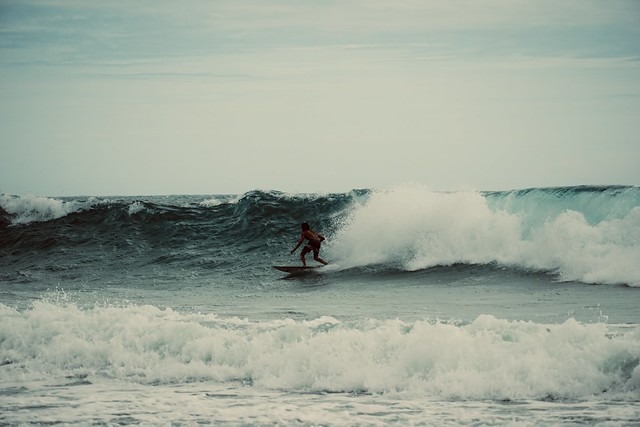 Surfer @ Arugam Bay Sri Lanka by Ruud van der Horst, on Flickr
 Baby Point
Baby Point is a surfing area at the southern end of Arugam Bay’s main beach and is widely known as the main beginner surf spot on Sri Lanka’s east coast.
The break is recognised for its small and manageable waves combined with a shallow sandy seabed, which reduces risk and supports early learning.
Wave heights at Baby Point usually range from two to three feet and form a gentle right-hand break that lacks strong power.
These softer waves allow new surfers to practise basic skills while also appealing to longboard surfers who prefer slow and relaxed rides.
Under favourable conditions, waves can roll through from the main break and create long rides that may stretch for 800 to 900 metres.
Surf conditions typically improve from April and continue until October, with the most reliable swells recorded between July and November during Arugam Bay’s peak season.
 Arugam Bay by Joachim, on Flickr
 Crocodile Rock
Crocodile Rock is a natural rock formation and surf spot located approximately three kilometres south of Arugam Bay.
It is named for its crocodile-like shape and offers panoramic views from its summit, attracting visitors for sunrise and sunset.
The surrounding lagoon and coastal area support diverse wildlife, including birds, crocodiles, and occasionally monkeys or water buffalo.
The rock formation produces moderately frequent point breaks, with waves averaging up to 4 metres, providing a quieter alternative to the busier surf spots at Arugam Bay.
Surfing conditions are best from May to September, with peak waves in July and August.
Peanut Farm
Peanut Farm is a surfing area on Sri Lanka’s east coast, located just south of Arugam Bay, and is known for its twin right-hand point breaks.
The site takes its name from former peanut plantations that once covered the area and were destroyed by the 2004 Indian Ocean tsunami.
The beach features two distinct surf breaks that suit different skill levels, with a gentle sandy-bottom wave close to shore commonly used by beginners and intermediate surfers.
Farther out, a longer and more powerful break draws experienced surfers seeking long rides.
Surf conditions are most consistent between May and October, when seasonal swells reach the coastline.
Waves typically measure between three and four feet, with rides stretching roughly 200 to 350 metres toward the shore during favourable conditions.
The area is also noted for its natural surroundings, where wild elephants are occasionally seen near the beach during early morning and evening hours.
 Peanut Farm Beach by Saumil Shah, on Flickr
 Lahugala National Park
Lahugala Kitulana National Park is a small wildlife reserve located in the Heda Oya basin about 16 km inland from Pottuvil, in Sri Lanka’s eastern region.
Covering 1,554 hectares, the area was declared a wildlife sanctuary in 1966 and a national park in 1980.
A central feature of the park is the Lahugala Tank, where large herds of Asian elephants gather to feed on grass during July and August.
The park supports a range of mammals, including sloth bears, Sri Lankan leopards, tufted gray langurs, wild boars, and deer species such as spotted deer and sambar deer.
Its wetlands and water bodies also attract many bird species, including great white pelicans, purple herons, painted storks, white-bellied sea eagles, and endemic birds such as the Sri Lanka spurfowl and red-faced malkoha.
The nearby Magul Maha Viharaya, an ancient Buddhist temple, adds historical and cultural interest to the park’s surroundings.

Whiskey Point
Whiskey Point is a surf spot located near the village of Urani, just north of Arugam Bay in Pottuvil.
It features a right-hand point break over a sandy bottom, with waves breaking off a rocky outcrop near the beach, making it suitable for beginner surfers.
The area also offers sea bathing, long beach walks, and ocean sunrises.

Pottuvil Point
Pottuvil Point is a surfing area located six kilometres north of Arugam Bay, near Whisky Point.
It is famous for its long right-hand point break, often providing rides exceeding 200 metres, making it one of the longest on Sri Lanka’s east coast.
The break is best suited for intermediate and advanced surfers, particularly from April to October.
The wave begins near a rocky headland and continues over a mostly sandy bottom, though large rocks and boulders are present at the initial take-off zone.
The site remains relatively uncrowded compared with Arugam Bay’s Main Point, offering a calmer experience and the advantage of two breaks.
Whisky Point located just 100 meters up the beach, ideal for beginners.

Elephant Rock
Elephant Rock is a natural rock formation and surfing destination on the southeast coast near Arugam Bay, popular for its beginner-friendly waves and scenic surroundings.
The beach features a gentle right-hand point break over a sand bottom, attracting beginner and intermediate surfers, with the most consistent surf from June to September during the dry season.
Its golden sands, jungle backdrop, lagoons, and diverse wildlife, including buffalo, monkeys, small crabs, and occasionally elephants.
A 100-metre-high rock formation provides elevated views of the Indian Ocean, surrounding jungle, and sunsets, making it a quiet alternative to busier coastal areas.
 Arugam Bay by BackpackerTrack.com, on Flickr
 Pottuvil Lagoon
Pottuvil Lagoon is a shallow brackish water lagoon on Sri Lanka’s southeastern coast that covers about 200 acres and is edged by dense mangrove forests.
The lagoon is known for its rich wildlife, including many bird species, water monitors, crocodiles, and macaque monkeys.
Wild elephants are often seen visiting the lagoon area in the late afternoon.
Mangrove forests and surrounding sand dunes frame the lagoon and form a varied coastal ecosystem.
Visitors can explore the lagoon by boat or canoe safaris that allow close observation of wildlife in its natural setting.
Early morning and late afternoon trips are recommended due to cooler temperatures and better chances of wildlife sightings.
 Fishing, Pottuvil Lagoon by Mudara Perera, on Flickr
 Muhudu Maha Vihara
Muhudu Maha Vihara is a historic Buddhist temple and archaeological site located among the dunes of Pottuvil in the Eastern Province of Sri Lanka.
Local tradition identifies the area as the landing place of Princess Viharamahadevi, where she came ashore after being cast out to sea by her father.
King Kavan Tissa is believed to have built this temple complex to mark the location where Princess Viharamahadevi landed after her sea voyage.
The archaeological site contains the ruins of an ancient image house featuring a stone statue of the Lord Buddha.
Two smaller stone statues standing beside the central figure are believed by historians to represent the royal figures of King Kavan Tissa and Queen Viharamahadevi.
The surrounding area is part of a protected archaeological reserve that preserves various stone pillars and foundations from the original temple complex.
