Top Sights in Sri Jayawardenepura Kotte
Sri Jayawardenepura Kotte is the official legislative and administrative capital of Sri Lanka, home to the national Parliament, key government institutions, wetlands, and urban parks.

Diyasaru Park
Diyasaru Park, known as the Thalawathugoda Biodiversity Study Park, is a protected urban wetland of about 60 acres near Sri Jayawardenepura Kotte.
The park stands on former marshland and a flood detention zone, and it opened to the public in 2017 as part of a programme to restore urban wetlands.
The landscape includes marshes, ponds, flooded woodlands and artificial canals that support more than 150 plant species and about 230 animal species.
Wildlife records list more than 80 resident wetland birds, about 50 migratory bird species, 15 freshwater fish species and a range of butterflies, dragonflies, reptiles, mammals and amphibians.
Endangered species such as the Fishing Cat, otters and the Purple-faced Leaf Monkey are reported often.
Visitors use walking trails, boardwalks, wooden paths and a birdwatching tower that provide close views without disturbing wildlife.
A butterfly garden with more than 40 species, along with a thatched pavilion and an organic agriculture zone, supports research, learning and environmental education.
Boat services along the canals give an alternative view of the wetland system.
The park also helps reduce flood risk in nearby urban areas by absorbing excess rainwater.

Beddagana Wetland Park
Beddagana Wetland Park is a protected urban wetland near the Parliament Complex in Sri Jayawardenepura Kotte.
The park covers about 18 hectares, was declared a wildlife sanctuary in 1985, and opened to the public as a wetland park in 2016.
It supports a diverse range of wildlife, including around 85 species of resident and migratory birds, 45 butterfly species, freshwater fish, reptiles, amphibians, and mammals such as fishing cats and water monitors.
Endangered species, including the Western Purple-faced Langur, are also present, while plants such as Hanguana contribute to natural water filtration.
Visitors can use more than 1.5 kilometres of walking trails, boardwalks, and wooden paths, including a floating deck along the Lakeside Trail.
The park provides facilities such as an observation tower, bird hide, butterfly walk, duck pond, and designated wader viewing areas to support wildlife observation and education.

Sri Lankan Parliament Building
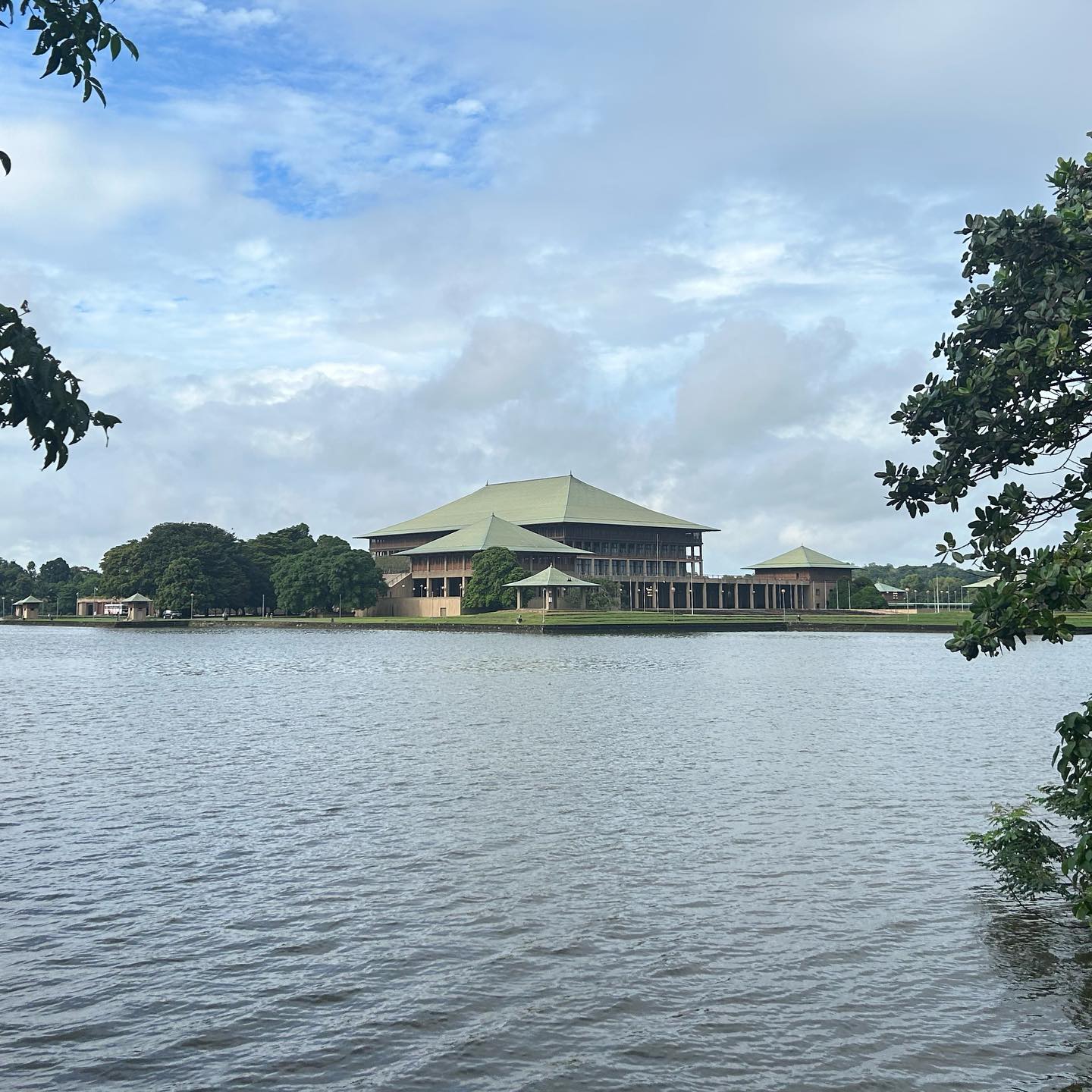
Sri Lanka’s Parliament Building is the country’s main legislative complex located on a 12-hectare artificial island in the Diyawanna Oya at Sri Jayawardenepura Kotte.
Designed by renowned architect Geoffrey Bawa, the building is a notable example of Tropical Modernism, combining modern design with local architectural traditions.
The central pavilion is encircled by five smaller pavilions, all topped with tiered copper roofs inspired by Kandyan architecture.
The complex opened in 1982, replacing the former Parliament at Galle Face in Colombo after Sri Jayawardenepura Kotte was designated as Sri Lanka’s new administrative capital.

Diyatha Uyana
Diyatha Uyana is a public urban park along the Diyawanna Oya in Battaramulla near Sri Lanka’s Parliament Complex.
The park opened in 2014 on reclaimed marshland and combines leisure facilities, environmental conservation and commercial activity within a restored wetland.
A walking path of about 1.6 to 1.8 kilometres runs through the park and is bordered by lawns, ponds and trees.
Facilities include a children’s play area, opportunities for birdwatching and boat rides on the waterway, with swan boats among the popular attractions.
The park also houses the Water’s Edge floating restaurant, built with the support of the Sri Lanka Navy, which offers dining and night rides on the lake.
Additional features such as a flower market, circular aquarium, food court and weekend floating market support local commerce and provide venues for cultural and community events.
Kotte Raja Maha Viharaya
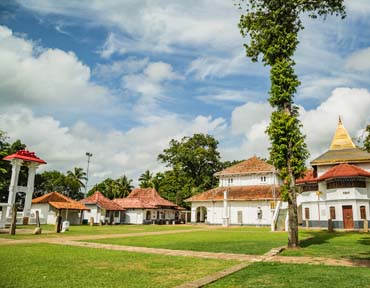
Kotte Raja Maha Viharaya is a 15th-century Buddhist temple located in Sri Jayawardenepura Kotte.
The temple suffered extensive damage during the colonial invasions and was restored in 1818 by Ven. Pilane Buddha Rakkitha Thero, who rebuilt the complex using surviving stupa fragments, stone pillars, and other original remains.
The site includes an image house with two chambers decorated with Kandyan-era frescoes that show later artistic influences introduced during the period of restoration.
Kotte Raja Maha Viharaya hosts an annual Perahera in honour of the Sacred Tooth Relic, a tradition believed to date back to the reign of King Parakramabahu VI.
The temple also preserves the Dalada Gira, a stone believed to have formed part of the original Tooth Relic chamber.

Diyawanna Lake
Diyawanna Lake, an artificial waterbody built in 1979, stands as a central feature of Sri Lanka’s administrative capital and remains a key part of the area’s flood control system.
The lake supports water retention and contributes to the conservation of surrounding wetlands that hold a range of local plant and animal species.
The site has a historical link to the 15th-century Kindom of Kotte, which once used the waterbody as a defensive boundary around its capital.
An island within the lake houses the Sri Lankan Parliament Building, which is one of the scenic landmark of the area.
Recreational facilities along the lake’s, including Diyatha Uyana, provide walking tracks, boating, swan rides.
The lake and its wetlands continue to function as an essential flood buffer while providing regular opportunities for birdwatching, relaxed walks and family visits.
National Sandalwood Garden
The National Sandalwood Garden, also known as Jathika Handun Uyana, is a nine-acre urban park dedicated to the cultivation and conservation of sandalwood trees in Sri Lanka.
The garden contains about 1,200 sandalwood plants, including roughly 900 white sandalwood trees and 300 rare red sandalwood varieties.
It was officially opened in July 2021 near the Diyawanna Oya Parliamentary Complex, adjacent to the Ape Gama heritage village, and is the country’s first state-funded park focused on sandalwood preservation.
The park also features twelve decorative ponds, cascading water elements and evening illumination that create a calm and visually appealing environment for visitors.

Thalangama Wetland
Thalangama Wetland is a protected urban ecosystem near Sri Jayawardenepura Kotte that covers about 118 hectares and has been designated an Environmental Protection Area since 2007.
The wetland consists of Thalangama Lake and Averihena Lake, historic reservoirs that continue to support irrigation, agriculture and local water management.
Thalangama Lake, which covers around 28 acres, dates to the 15th century during the reign of King Parakramabahu VI and was historically used to supply water for paddy cultivation.
Averihena Lake, measuring about eight acres, also functions as an irrigation source within the system.
Marshes, swamp forests, paddy fields and scrublands surround the lakes and together sustain the wetland’s diverse natural habitats.
The area supports more than 100 bird species, including resident and migratory birds, as well as reptiles, mammals and a wide range of freshwater fish.
Endangered wildlife such as the Fishing Cat and the Western Purple-faced Leaf Monkey are found in the wetland, with early mornings and late afternoons considered the best times for observation.
Thalangama Wetland also provides recreational and educational opportunities through birdwatching, cycling and nature walks, while serving as a site for research on wetland ecology, biodiversity and sustainable water management.
Ape Gama Heritage Village
Ape Gama Heritage Village is a traditional village model in Battaramulla near the Parliament Complex and is designed to present rural life as it existed in earlier periods of Sri Lanka’s history.
Opened in 2013 close to the Diyawanna Oya Parliamentary Complex, the site functions as a living museum that displays traditional architecture, crafts and everyday practices of village communities.
The village features mud-and-thatch houses arranged around a central garden, including structures such as the Maha Gamarala’s house, the Veda Gedara for traditional physicians, a blacksmith’s forge and shared ritual spaces.
Life-size figures and on-site demonstrators show activities such as farming, cooking and village administration, offering visitors an immersive view of historical self-sufficiency and social organisation.
Ape Gama also focuses on traditional arts, crafts and food, with artisans demonstrating pottery, mask carving, brasswork, lace-making and batik.
Visitors can sample herbal drinks and sweetmeats made with kithul palm sugar, while the Folk Art Center provides dance and drumming lessons that support the preservation of Sri Lanka’s intangible cultural heritage.

Kotte Archaeological Museum
The Kotte Archaeological Museum, also known as the E.W. Perera Memorial Museum, preserves the history and culture of the Kotte Kingdom and its surrounding regions.
Established in 1992, the museum is housed in the former residence of E.W. Perera, a prominent independence activist known as the “Lion of Kotte,” and is protected as an archaeological monument.
The museum contains five exhibition rooms that display artifacts from Kotte and nearby areas, including traditional Sinhalese and colonial-era clothing, swords, knives, firearms, pottery, coins, statues and a model map of the ancient fortified city.
Items recovered from local archaeological sites, such as the Alakeshwara Palace ruins, provide insight into both royal and everyday life during the Kotte period.
The museum offers free entry and functions as a central repository for historical, cultural and political artifacts, highlighting Kotte’s role as a fortified capital and commemorating the legacy of one of Sri Lanka’s independence leaders.