Top Sights in Mihintale
Mihintale is an ancient monastic complex near Anuradhapura in Sri Lanka’s North Central Province and is widely recognised as the place where Buddhism was first introduced to the island.

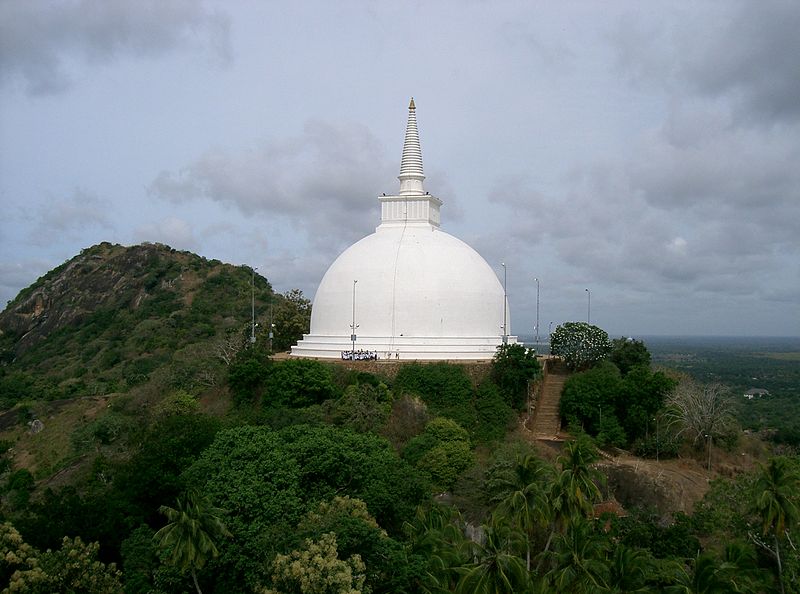
Mihintale Maha Seya
Mihintale Maha Seya is the largest stupa at the summit of the Mihintale monastic complex.
The site marks the place where Buddhism is traditionally said to have been formally introduced to Sri Lanka in the 3rd century BCE, when King Devanampiyatissa met Arahant Mahinda.
The stupa was constructed in the first century CE during the reign of King Mahadathika Mahanaga and was built to enshrine a hair relic of the Buddha, known in tradition as the urna relic.
Rising to about 155 feet, the stupa dominates the surrounding landscape and is visible from nearby roads, ancient reservoirs and the plains.
From the summit, visitors can see panoramic views of the ancient site and the forested terrain.

Kaludiya Pokuna
Kaludiya Pokuna, commonly known as the Black Water Pond, is an ancient hydraulic and monastic complex at the base of the Mihintale hills.
The pond takes its name from the dark appearance of its water, caused by reflections from dense forest cover, granite boulders and surrounding rocky cliffs, which create a secluded and shaded setting.
Kaludiya Pokuna is the largest reservoir at Mihintale and forms part of the area’s irrigation system. Other smaller ponds include Singha Pokuna and Naga Pokuna.
Historical sources suggest Mihintale once supported thousands of monks, with the pond likely serving as a main source of water for daily use, ritual bathing and communal activities.
The area around the pond contains remains of stone-built residences, meditation caves, paved pathways, a bathhouse and a chapter house used for monastic assemblies.

Kantaka Chetiya
The Kantaka Chetiya is an ancient Buddhist stupa within the Mihintale archaeological complex and is regarded as one of the earliest surviving monuments from Sri Lanka’s Anuradhapura period.
Archaeological evidence dates the structure to at least the second century BC, placing it among the oldest known Buddhist stupas still visible on the island.
The monument stands on a rocky rise along the main ascent to Mihintale and was built on three stepped terraces, known as pesavalalu, which elevate it above the surrounding landscape.
Its present form rises to about 40 feet in height, with historical records noting a large circular base measuring between about 130 metres and 425 feet in circumference.
Kantaka Chetiya is particularly noted for its four vahalkadas, or frontispieces, positioned at the four cardinal directions of the stupa.
These vahalkadas are richly decorated with stone carvings that include dwarfs, elephants, swans, animals, human figures, divine beings and detailed floral patterns.
Finely carved guard stones and decorated stone pillars are also linked to the frontispieces, underlining the monument’s architectural skill and artistic importance within the Mihintale complex.
Katu Seya
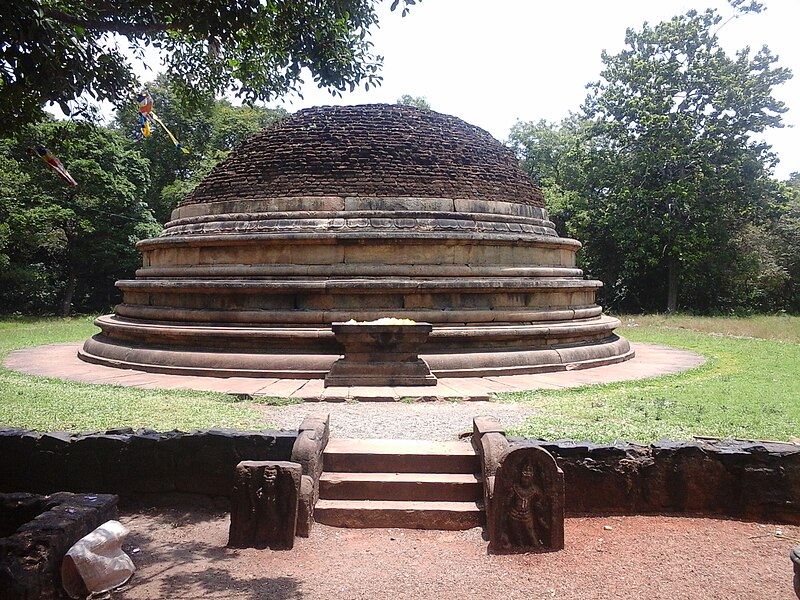
Katu Seya is an ancient Buddhist stupa at the foot of the Mihintale mountain, located close to Indikatu Seya and associated with a smaller sub-monastic complex.
It is believed to enshrine iron tools and blacksmithing equipment used in the construction of the Mihintale monastery rather than bodily relics.
Archaeological excavations in the early 19th century uncovered copper plates inscribed with Mahayana Buddhist sutras in Sanskrit and Sinhala.
Scholars date the inscriptions to the 8th or 9th centuries, pointing to the presence of Mahayana Buddhist influences at Mihintale during that period.

Indikatu Seya
Indikatu Seya is a small Buddhist stupa located at the foot of the Mihintale monastic complex.
It is believed to enshrine needles used by Arahants to stitch their robes.
Archaeological research indicates that the site functioned as a Mahayana Buddhist centre during the 8th and 9th centuries.
Excavations carried out in 1923 uncovered 91 copper plates bearing Sanskrit verses from the Mahayana Kasyapa Parivarta and Prajnaparamita Sutras.

Mihindu Maha Seya
The Mihindu Maha Seya is a Buddhist stupa at the Mihintale monastic complex and is believed to enshrine the bodily relics of Arahant Mahinda, the monk credited with introducing Buddhism to Sri Lanka.
The monument was constructed in the 2nd century BCE by King Uttiya, who succeeded King Devanampiyatissa, following Mahinda’s death, and is regarded as a funerary structure.
The stupa is located on the western side of the larger Mihintale Maha Seya.
Archaeological excavations conducted in 1951 under Dr. Senarath Paranavitana identified the stupa as one of Sri Lanka’s earliest brick constructions.
Researchers uncovered a polished black earthenware casket containing a miniature gold stupa and bone fragments.
Sela Chetiya
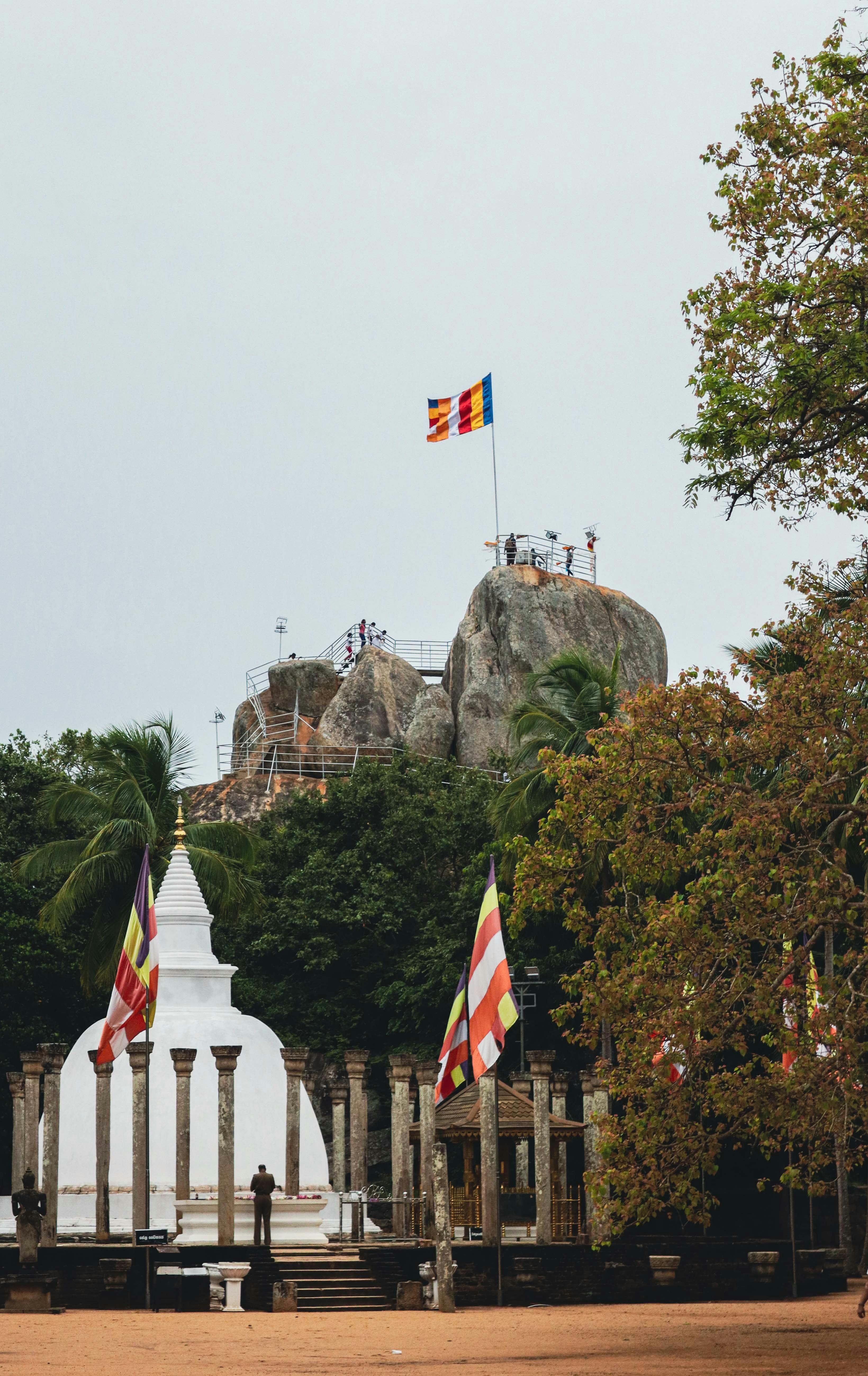
The Sela Chetiya is a historic stupa at the summit of the Mihintale monastic complex and is traditionally believed to mark the place where the Buddha meditated during his third visit to Sri Lanka.
The stupa stands on a stone-paved platform, or maluwa, and follows a bell-shaped design known as gantakara, a common form in ancient Buddhist architecture.
The site also includes a vatadage, a circular relic house with stone pillars that once supported a protective roof over the shrine.
Historical records indicate that construction at the site took place in the second century under King Kanittha Tissa.
The stupa is believed to enshrine the Urna Roma, a sacred hair relic of the Buddha, and the precinct contains two damaged stone statues, one representing the Buddha and the other thought to depict King Devanampiya Tissa.

Giribanda Seya
Giribhanda Seya is an ancient Buddhist stupa within the Mihintale monastic complex and is dated to the 8th century CE, making it part of the later development phase of the sacred site.
The stupa stands on a small hill to the left of the main stairway near the alms hall, and its original patron is unknown, with the monument once referred to as the Nameless Dagoba before being identified as Giribhanda Seya.
The structure measures about 25 metres in circumference and around 8 metres in height, reflecting the architectural style and scale typical of its period.
Archaeological excavations revealed a rare and structurally intact relic chamber, although the physical relics are believed to have been removed by treasure hunters long ago.
The interior walls of the relic chamber are decorated with finely executed paintings of deities shown in devotional poses, drawn in delicate red linework.
Some figures are depicted holding lotus flowers, symbols of purity and spiritual awakening, highlighting the religious and artistic importance of the monument.