Top Sights in Dambulla
Dambulla is a town in Sri Lanka’s Central Province, located within the Cultural Triangle, known for its cave temple complex, scenic surroundings, and role in agricultural trade.

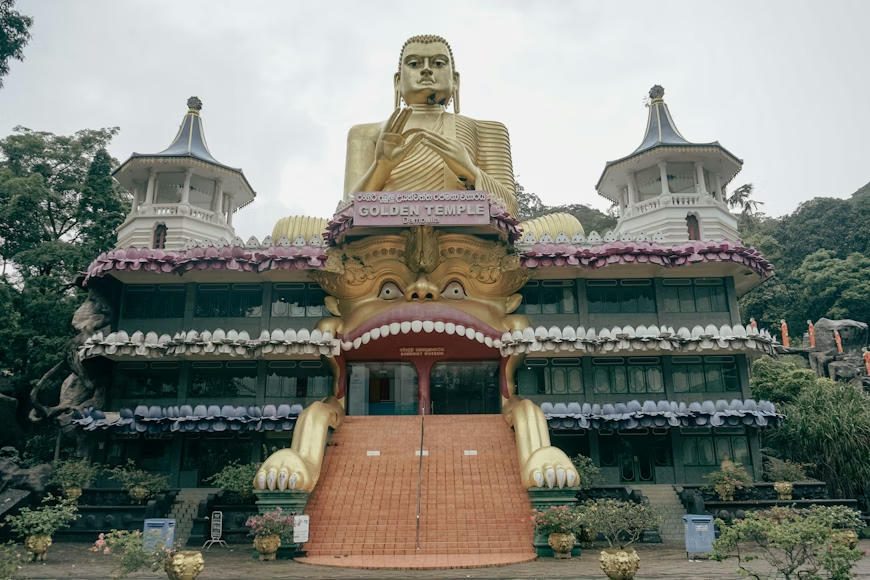
Dambulla Cave Temple
The Dambulla Royal Cave Temple, also known as the Golden Temple of Dambulla, is a cave temple complex and UNESCO World Heritage Site located in Dambulla.
The site sits about 160 metres above the surrounding plains and consists of natural caves that were transformed into Buddhist shrines.
Its origins date to the 1st century BCE when King Valagamba sought refuge in the caves during exile and later converted them into a monastery after regaining the throne of Anuradhapura.
Subsequent rulers expanded and decorated the complex over centuries, with major additions by King Nissanka Malla in the 12th century and later enhancements by Kandyan kings in the 18th century.
The core of the temple consists of five main caves housing 153 Buddha statues, images of three Sri Lankan kings, and figures of four Hindu deities.
The cave walls and ceilings are covered with extensive murals, with some of the earliest paintings from the Anuradhapura period and later works showing the distinct Kandyan style.
Popham’s Arboretum
Popham’s Arboretum, Sri Lanka’s only dry-zone arboretum, stands as a long-running experiment in forest restoration along the Dambulla–Kandalama Road, demonstrating how degraded land can recover through natural ecological processes.
Founded in 1963 by English ecologist F. H. “Sam” Popham, the arboretum began on 7.5 acres of scrub jungle and abandoned chena land. It has since expanded to 34.5 acres and functions as a living laboratory for dry-zone forest regeneration.
The site showcases a semi-evergreen monsoon dry forest, now home to a wide range of plant and animal species. Visitors are able to explore the arboretum through guided nature trails and supervised night walks.
Popham’s original aim was to develop practical methods for restoring dry-zone forests without large-scale planting. His work focused on allowing nature to regenerate itself, guided by careful management rather than intensive intervention.
In 1989, a further 27 acres were added under the initiative of Prof. Cyril Ponnamperum. This expansion strengthened the arboretum’s role in long-term ecological research and conservation.
The forest was developed using Assisted Natural Regeneration, a method that encourages growth from existing soil seed banks. Management includes controlling invasive grasses, removing climbers and thorny shrubs, pruning dense canopies, and clearing dead or obstructive growth.
As a result, the arboretum now supports more than 350 plant species from 83 families. These include around 100 timber species, 70 medicinal plants, and a wide range of herbs, climbers, and parasitic plants.
The regenerated forest also sustains notable faunal diversity. Recorded species include 25 mammals, 83 birds, 77 butterflies, and 12 dragonflies.
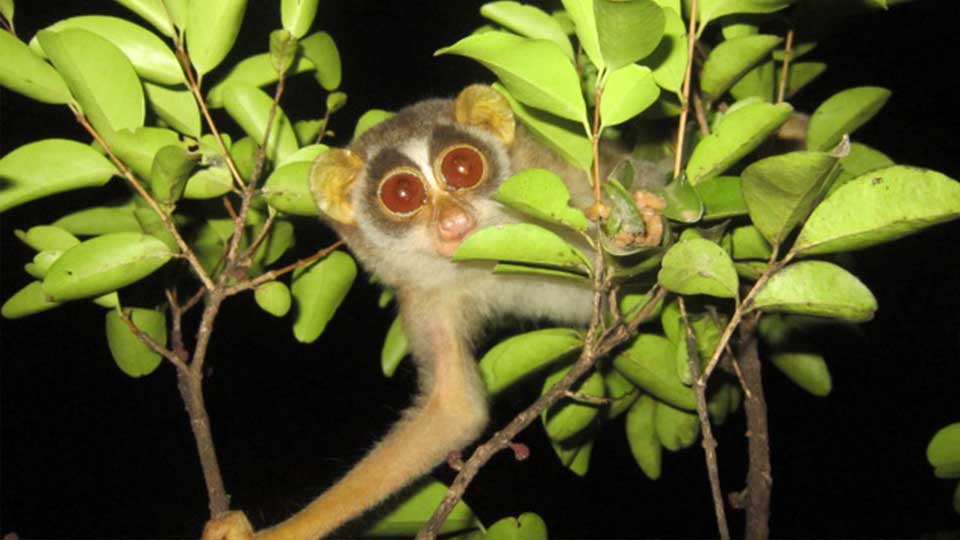
Birdlife includes the Sri Lanka junglefowl, grey hornbill, brown-capped babbler, blue-faced malkoha, blue-tailed bee-eater, and paradise flycatcher. Mammals such as bats, pangolins, and the Grey Slender Loris have also been observed.
Night visits are a key attraction, allowing guided observation of nocturnal wildlife. The Slender Loris is among the species most frequently encountered during these tours.
Facilities at the arboretum include marked trails for birdwatching and botanical study, limited accommodation, camping areas, and the former residence of Sam Popham. The house was designed by architect Geoffrey Bawa.
While open to visitors, the arboretum remains primarily a centre for research and conservation. Its decades-long management offers valuable insight into restoring and sustaining Sri Lanka’s dry-zone forest ecosystems.

Dambulla Market
Dambulla Market, officially known as the Dambulla Dedicated Economic Centre, is Sri Lanka’s largest wholesale hub for fruits and vegetables and a critical link in the country’s agricultural supply chain.
Located about one kilometre from the Dambulla Golden Temple, the market functions as the main distribution point for fresh produce arriving daily from farming regions across the island. It plays a central role in supplying urban centres and regional markets nationwide.
The market was established in 1999 as part of a government initiative to decentralise wholesale trade. Before its opening, much of the country’s vegetable trade was concentrated at Colombo’s Manning Market.
Under the new system, Dambulla was selected for its strategic location in the Central Province. The move reduced congestion in Colombo and brought farmers closer to national distribution networks.
Produce reaches the market from major agricultural districts including Nuwara Eliya, Anuradhapura, Matale, and surrounding areas. Lorries arrive throughout the night and early morning carrying vegetables, fruits, and other farm products.
The complex is designed for large-scale trade, with organised wholesale stalls, storage facilities, and loading zones. This layout allows for rapid buying, pricing, and onward transport to markets around the country.
For visitors, the market offers a direct view of Sri Lanka’s agricultural economy in operation. The early morning hours are the busiest, marked by intense bargaining and continuous movement of goods.
Although it is primarily a commercial centre, the market also provides insight into rural livelihoods and food distribution systems. Its location near the Golden Temple allows travellers to combine a cultural visit with an observation of one of the country’s most important economic hubs.
Ibbankatuwa Megalithic Tombs
The Ibbankatuwa Megalithic Tombs, near Dambulla in central Sri Lanka, form one of the island’s most significant Early Iron Age burial complexes, offering rare insight into protohistoric life between about 700 BCE and 400 BCE.
The site is regarded as one of the largest and most important megalithic cemeteries in Sri Lanka. Archaeologists consider it a key source for understanding early social organisation, ritual practices, and technological development during the island’s protohistoric period.
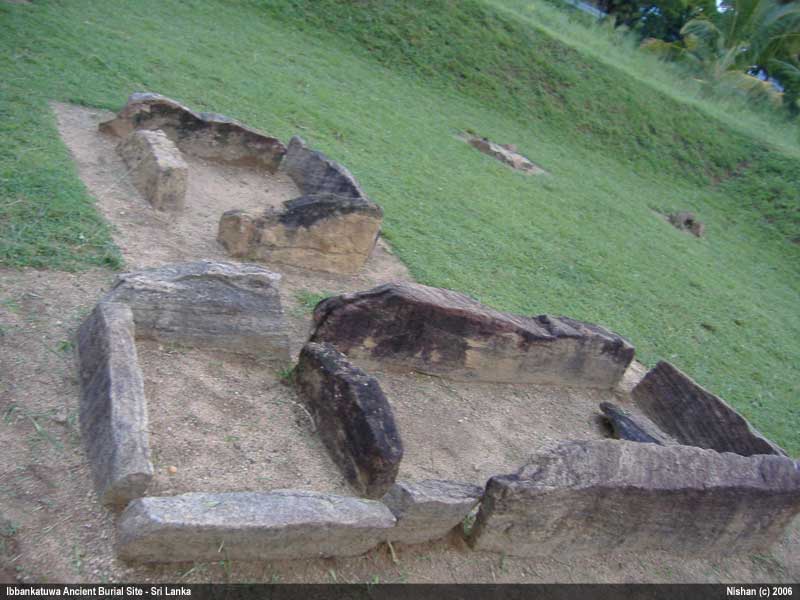
The burial ground is dominated by stone-built cist graves. Each consists of four upright slabs forming a chamber, sealed with a flat capstone.
Alongside these are urn burials, in which human remains were placed inside large clay vessels. These urns were set within stone-lined chambers, indicating variation in funerary customs within the same community.
Excavations have identified 42 burial clusters, each containing multiple graves arranged in a planned cemetery layout. Further investigations in 2015 revealed 47 additional burials west of the original area.
These later discoveries included stone urn burials and granite slab chambers, many covered with capstones. Urns were made from red or black clay and produced in different sizes.
Artifacts recovered from the tombs include clay pots, iron tools, copper objects, beads, necklaces, and gold items. Some ornaments contain gemstones not native to Sri Lanka, suggesting long-distance trade or exchange networks.
The burial complex extends across roughly 13 hectares near the Dambulu Oya, highlighting its role as a major ritual landscape rather than a small, local cemetery.
Archaeological work at the nearby Polwatta site has uncovered an Early Iron Age settlement linked to the tombs. This connection provides context for the daily lives of the people buried at Ibbankatuwa.
The cemetery reflects a period when communities were developing more complex social structures and sophisticated mortuary traditions. Its long use indicates continuity in ritual practice alongside gradual technological change.
Today, the Ibbankatuwa Megalithic Tombs are accessible via local roads from Dambulla. Visitors can walk among the stone graves in a quiet rural setting.
The site offers an educational experience for researchers, students, and history enthusiasts. It also provides a direct and tangible connection to Sri Lanka’s earliest known burial traditions.
Menik Dena Archaeological Reserve and Arboretum
Menik Dena Archaeological Reserve and Arboretum is an ancient Buddhist monastery site and protected forest reserve located about 15 kilometres from Dambulla in Sri Lanka’s Matale District.
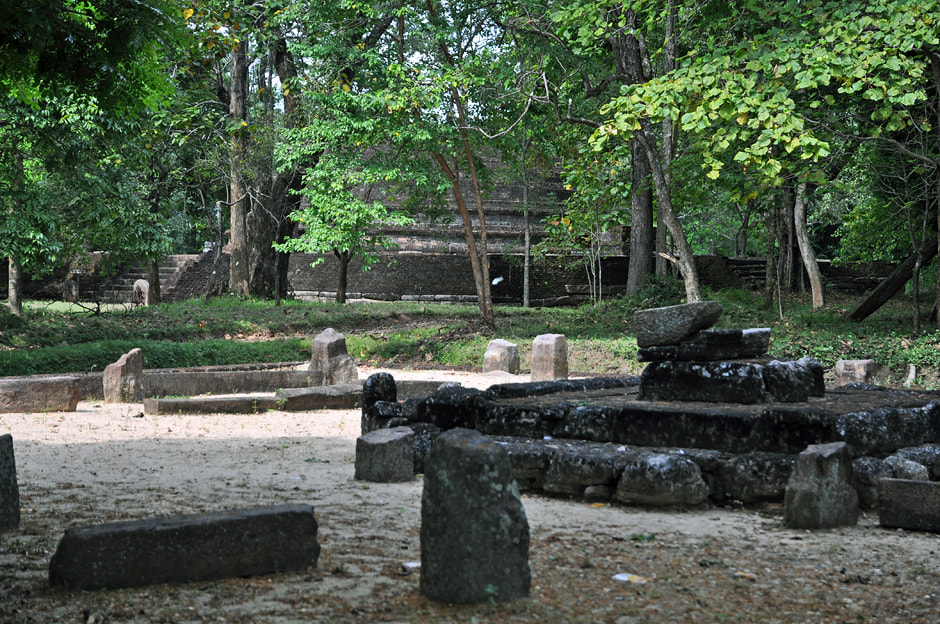
The site is recognised for preserving one of the most complete examples of a Pabbata Vihara, a monastic layout linked to the late Anuradhapura period.
The monastery is built around an elevated central courtyard covering roughly two hectares and features five main structures: a stupa, a Bodhighara for a sacred Bodhi tree, an image house known as a Patimaghara, an Uposathaghara for monastic rituals, and a Sabhasala or assembly hall.
Granite pillar inscriptions found at Menik Dena record land grants and identify the monastery’s ancient name as Budugama, meaning “village of the Buddha.”
Local tradition connects the site to the Arhat Maliyadewa, and legends claim his relics were once kept there in a gem-studded casket.
Surrounding the ruins is a 14-hectare arboretum within a larger 16-hectare reserve, protecting native tree species such as Na, Milla, and Nadun, and acting as a natural buffer between the monastery, the nearby Manika tank, and the Nicola Hill range.
The site is believed to have begun as a secluded monastic retreat around the 3rd or 4th century CE and rose in prominence during the reign of King Kithsiri Megha in the 6th century under the name Budugama.

Jathika Namal Uyana
Jathika Namal Uyana, also known as the Ironwood Forest, is an ecological and archaeological reserve located about 15 kilometres from Dambulla, featuring a trail that links its ironwood forest with a rose quartz formation.
The reserve, declared protected in 2001, is known for hosting Sri Lanka’s largest ironwood forest and the most extensive rose quartz formation in South Asia.
It also contains archaeological remains associated with Buddhist monastic life dating back more than two thousand years.
The forest covers over 260 acres and is dominated by ironwood, locally known as Na, which is Sri Lanka’s national tree, and supports more than 80 plant species used in traditional medicine.
A shaded walking trail runs through the forest, and the area is noted for its birdlife, with about 18 to 20 species recorded, while small populations of toque macaques and spotted deer live in the forest and its edges.
The reserve’s rose quartz ridges are marked by their pink colour and are recognised as the largest pink quartz formation in South Asia.
Archaeological remains scattered across the site include a stupa, Bodhigaraya, Seema Malakaya, caves, and simple monastic dwellings linked to monastic activity from the 3rd century BCE during the reign of King Devanampiya Tissa.